Landscape Maintenance for Landscapes with Trees, Turf, and Beds
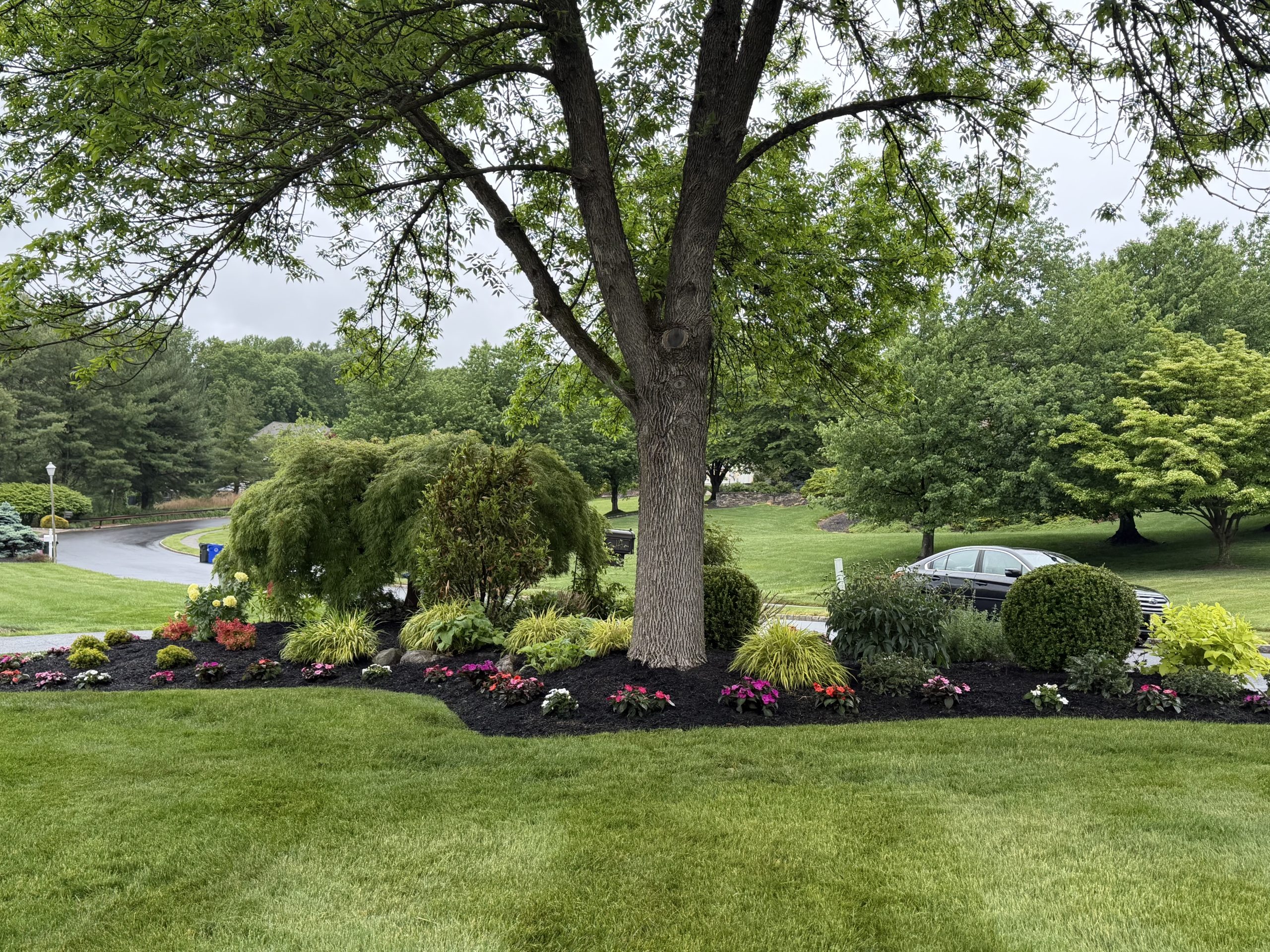
A landscape with mature trees, healthy turf, and well-kept planting beds looks effortless only from a distance. Up close, it is a balancing act. Trees want root protection and stable soil moisture. Turf wants light, air, and a mowing program that matches its growth. Beds need clean edges, weed control, and enough organic matter to support shrubs, perennials, and seasonal color. When one area gets all the attention, another usually pays for it.
That is why good landscape maintenance is never just mowing or trimming. It is a site-wide practice of observation, timing, and restraint. On mixed landscapes, the best results come from understanding how each zone affects the others. A crew can make a property look neat in a few hours. Keeping it healthy over years takes better judgment.
I have seen landscapes decline not because anyone ignored them, but because the care was too generic. The turf was fertilized as if the whole site were an open lawn, even though half of it sat under dense tree canopy. Beds were topped with fresh mulch every season until root flares disappeared and water ran off instead of soaking in. Lower tree limbs were cut back to “open things up,” then the turf beneath still failed because the real problem was compacted soil and shallow roots. Maintenance has to match the site, not a standard route sheet.
The landscape works as one system
On a mixed property, every maintenance decision has a ripple effect. Irrigation is a good example. Water enough to keep cool-season turf green through heat, and you may create overly wet conditions around tree roots or disease pressure in beds. Cut irrigation back to protect trees in heavy soil, and turf on exposed slopes may thin out fast. Pruning is similar. Raise a tree canopy for clearance, and light levels increase enough to change the plant palette beneath it. Edge beds too aggressively near surface roots, and the tree takes damage that may not show until much later.
The practical lesson is simple. A landscape with trees, turf, and beds should be maintained by zones, but managed as a whole. The lawn crew, the bed crew, and the irrigation technician cannot work as if they are on separate properties. If they do, small conflicts pile up. Over time, those conflicts become expensive corrections.
A healthy mixed landscape usually has three visible qualities. First, transitions are clean. Turf edges against beds are defined, not scalped. Mulch is contained, not spilling onto grass. Tree rings, where used, are wide enough to be useful and not just decorative. Second, plant vigor is even. You do not see one area pushed with fertilizer while another struggles under neglect. Third, the maintenance looks calm. No torn turf, no volcano mulch, no lion-tailed trees, no sheared shrubs trying to live in spaces that are too small for them.
Trees set the long-term framework
Trees are the most valuable and least replaceable part of most established landscapes. A lawn can be renovated in a season. Perennial beds can be redesigned in a weekend. A forty-year-old shade tree is a different matter. Good landscape maintenance starts by protecting that investment.
Root zones deserve more attention than they usually get. Most tree roots are in the upper soil layers, often extending well beyond the drip line. That matters because routine maintenance tends to happen exactly where trees are most vulnerable. Repeated mower traffic, string trimmer damage, edging cuts, and parked equipment all add stress. If a site has exposed surface roots or thinning turf under a canopy, that is often a sign that the area is being treated like lawn first and tree space second.
The best mixed landscapes usually give trees more room than the original installation did. In practical terms, that often means enlarging mulch rings or converting difficult turf areas under dense canopies into beds. A narrow ring around a trunk might look tidy, but it does very little for the root zone. A broader mulched area reduces competition from grass, lowers the chance of bark wounds, and moderates soil temperature and moisture. It also reduces the amount of trimming needed around the base, which prevents the kind of repeated injury that opens the door to pests and decay.
Mulch, however, has to be handled correctly. Two to three inches is usually enough for most sites. Piling it against the trunk is not extra care, it is a slow problem. I have pulled back mulch from the bases of ornamental and shade trees and found adventitious roots, soft bark, fungal growth, and hidden girdling issues that developed over years of well-meant maintenance. Keep the root flare visible. It should look like a tree entering the ground, not a post stuck into it.
Pruning also benefits from restraint. Mixed landscapes often invite over-pruning because people want cleaner lines over sidewalks, more light on turf, or sharper visibility near drives. Those are legitimate goals, but they should not lead to hollowed-out canopies or drastic elevation of lower limbs. Structural pruning, deadwood removal, and clearance cuts have their place. Blanket thinning and topping do not. When tree work is needed beyond minor maintenance, it is usually worth bringing in a qualified arborist rather than expecting routine landscape crews to make high-value decisions on the fly.
Turf is the most visible, and often the most overmanaged
Turf gets judged quickly. People notice color, density, stripe quality, and edges long before they notice whether shrubs are developing good form or whether a tree has root flare buried too deeply. That visibility often leads to overcorrection. Lawns are watered too often, fertilized too heavily, and mowed too short in an attempt to keep them uniformly green in every condition.
On properties with trees, uniform turf expectations are often unrealistic. Shade changes everything. Growth slows, evaporation drops, and roots from nearby trees compete heavily for water and nutrients. A sunny front lawn and a shaded side yard should not be managed exactly the same way, even if they are the same grass species. The shaded area may need less nitrogen, less irrigation frequency, and a higher mowing height. In some cases, it may need a different grass variety or a change in use altogether.
Mowing height is one of the simplest and most important decisions in landscape maintenance. Cutting too low weakens the plant, exposes soil, and favors weeds. It also makes the lawn more dependent on irrigation. Slightly taller turf, especially in summer or partial shade, generally performs better because it shades the soil surface, supports deeper rooting, and recovers more predictably from stress. On many commercial and residential sites, raising the deck even half an inch produces better results than another round of fertilizer.
Compaction is another hidden issue. Turf around tree roots, along desire paths, and near curbs often declines not because of fertility, but because the soil is too dense for roots to function well. Core aeration helps where turf is appropriate, but it needs to be used thoughtfully around trees. Mechanical operations should avoid damaging exposed roots and should fit the site conditions. In severely shaded or root-dense areas, aeration alone may not solve the problem. Sometimes the better choice is to stop forcing turf where the site clearly wants a bed.
Weed pressure in turf often tells you what the maintenance program is getting wrong. Annual weeds point to thin cover and open soil. Sedges suggest wet conditions or poor drainage. Moss in shade is not a moss problem, it is a site condition problem. Herbicides can suppress symptoms, but they rarely fix the reason the lawn is vulnerable.
Beds carry the detail work
Planting beds are where maintenance becomes visible at close range. A bed can have excellent plants and still look neglected if the edges are soft, the mulch is uneven, the weeds are seeding, or the shrubs are clipped into shapes that do not suit their growth habit. Beds ask for consistency more than intensity.
The most reliable bed maintenance starts with soil, spacing, and plant choice. If shrubs are crammed in because the installation wanted an instant full look, the maintenance budget will carry that decision for years. Crews end up shearing plants to keep windows clear, walks open, and signs visible. The result is often a shell of green foliage wrapped around bare wood. It looks controlled from twenty feet away and tired from five.
A better bed plan allows shrubs to reach a natural size and uses pruning to direct form rather than erase it. Hand pruning takes more skill, but it usually produces stronger structure and a more natural appearance. Perennials benefit from the same mindset. Cut back when needed, divide when crowded, deadhead when appearance or rebloom justifies it, but do not treat every bed like a hedge line.
Mulch is useful in beds for moisture conservation, temperature moderation, and weed suppression, but it should never be the main strategy. If a bed needs thick annual mulch to hide weeds, there is usually a deeper issue with plant density, soil exposure, irrigation, or timing. Overmulching also causes the familiar problems of matted layers, poor infiltration, and stem rot at plant crowns.
Edging is often overlooked until it is bad. A clean bed edge does more for the appearance of a property than many expensive seasonal changes. It creates contrast, keeps mulch in place, and gives the entire landscape a maintained look. But sharp edges must still respect roots. Around mature trees and shallow-rooted ornamentals, aggressive re-edging can do more harm than good.
Water management decides more than most people realize
When landscapes struggle, irrigation is often part of the story, either because there is not enough water, too much of it, or the wrong delivery pattern. Trees, turf, and beds do not all want water in the same way. Turf usually performs best with deeper, less frequent watering that wets the root zone and then allows some drying between cycles. Trees generally benefit from slow, broad soaking over a larger area, especially during establishment and drought. Beds vary by plant type, soil, and exposure, but many ornamental plantings suffer from frequent shallow irrigation that keeps the surface damp and roots lazy.
This is where zoning matters. A single station that sprays turf, shrubs, and tree trunks all at once is common, and it rarely produces ideal results. Overspray onto bark, sidewalks, and mulch is not just wasteful, it often signals that the system was never adjusted to fit the current landscape. Plants grow, canopies spread, and root zones shift. Irrigation should be reviewed as the landscape matures.
One property I worked on had recurring fungal issues in the lawn, washed mulch in the beds, and a slow decline in two maples near the drive. The culprit was not weather, it was a spray pattern that ran too often and hit everything poorly. Once the schedule was corrected, heads were adjusted, and the tree area was managed separately during dry spells, the site stabilized. The lesson was not that irrigation is bad, but that generic irrigation is expensive.
Seasonal timing matters more than annual volume
A landscape can receive a fair amount of care and still perform poorly if the timing is wrong. Maintenance windows should line up with plant growth and stress cycles, not just the calendar on a service contract.
In spring, the pressure to clean everything up fast leads to common mistakes. Beds are mulched before weeds are removed. Shrubs are sheared before bloom. Lawns are pushed with nitrogen while soils are still wet and roots are shallow. Early season work should focus on cleanup, inspection, pruning that suits the plant, and setting the irrigation and mowing program correctly from the start.
Summer demands a different posture. The goal shifts from pushing growth to preserving function. Mowing height often goes up, pruning intensity usually comes down, and irrigation has to reflect heat, rainfall, and soil conditions. This is the season when minor bark injuries, drought stress, and edge breakdown can escalate quickly.
Fall is one of the best times to strengthen the landscape. Turf recovers well in many climates during cooler weather. Trees and shrubs benefit from thoughtful planting and root-zone care. Beds can be edited, divided, and reset with less heat stress. Fall is also when many long-term corrections are easiest to make, because the urgency of summer appearance has passed.
Winter exposes structure. With leaves off and growth slowed, you can see branch architecture, traffic patterns, drainage issues, and bed geometry more clearly. It is a good time to assess what the site actually needs, not just what the routine has been.
A useful seasonal focus looks like this:
- https://finnwjng537.tearosediner.net/landscape-maintenance-guide-for-modern-residential-landscapes
- Spring, inspect irrigation, redefine edges, prune selectively, and correct winter damage before growth accelerates.
- Summer, protect roots and soil moisture, mow properly, monitor stress, and avoid cosmetic work that creates extra plant strain.
- Fall, repair turf, expand bed or mulch zones under stressed trees, divide crowded perennials, and reset plants that outgrew their space.
- Winter, handle structural pruning where appropriate, review drainage and traffic wear, and plan improvements for the next growing season.
Where mixed landscapes usually go wrong
Most problems on these properties are not dramatic. They are cumulative. A little too much mulch, a little too much shearing, a little too much irrigation in shade, a little too much traffic over roots. None of those choices ruin a site immediately. Together, they slowly flatten plant health and make the landscape dependent on more inputs.
The most common trouble spots are predictable:
- mower and trimmer damage at trunks and root flares
- turf forced to survive in dense shade or root-heavy soil
- mulch applied too deeply, year after year
- shrubs maintained by shearing when selective pruning is needed
- irrigation zones that treat unlike plant areas the same way
These are not glamorous corrections, but they are the ones that improve a property fastest. In many cases, better landscape maintenance does not mean doing more. It means stopping the few routine habits that create most of the stress.
The value of observation on each visit
Strong maintenance crews notice patterns. They see where water is pooling near a bed corner, where mower wheels are scalping a crown on a slope, where one tree is leafing out thinner than the others, where turf at the curb line is yellowing because reflected heat is different there. Those small observations are what separate route work from professional care.
A good mixed-site visit includes constant adjustment. If the soil is still wet, postpone heavy traffic in a bed. If a tree is dropping small twigs during heat, check moisture and root-zone competition before assuming it needs fertilizer. If turf along a bed edge keeps thinning, look at shade, root pressure, and edging technique before reseeding it again. Repeating the same maintenance when the site keeps giving the same warning is not consistency, it is drift.
Documentation helps, especially on larger properties. Notes on irrigation changes, pruning dates, disease pressure, and recurring weak spots can save a lot of guesswork. But written records are only useful if someone on site knows how to interpret them. Experience matters here. A veteran crew leader can often spot the start of decline weeks before a client sees it from the patio or parking lot.
What steady care looks like over time
The best landscapes with trees, turf, and beds do not stay perfect all season. They move through periods of flush growth, heat stress, cleanup, and recovery. Good maintenance respects that rhythm. It keeps standards high without demanding that every area perform like a catalog photo in every month.
Over time, steady care produces visible maturity. Trees develop full, stable canopies with protected root zones. Turf becomes denser where it belongs and is no longer forced where it does not. Beds look cleaner because the plants fit the space and the soil is managed well, not because fresh mulch is constantly covering mistakes. The whole property starts to feel settled.
That is the real aim of professional landscape maintenance. Not just a property that looks cut and blown, but one that functions well as a living system. When trees, turf, and beds are maintained with that mindset, the work compounds in the right direction. The site becomes easier to care for, more resilient under weather stress, and far more attractive for the people who use it every day.
Majestic Mowing & Landscaping LLC
Phone number: +19733975532
FAQ About Landscape Maintenance
What is landscape maintenance?
Landscape maintenance is the ongoing care, cleaning, and upkeep of outdoor green spaces to keep them healthy, safe, and attractive.
Is $100 an hour too much for landscape work?
An hourly rate of $100 is not too much for specialized or professional landscape work, though it sits at the higher end of the standard pricing spectrum.
How much do landscapers charge for maintenance?
For professional landscaping maintenance, homeowners typically pay $100 to $410 per month for recurring services, or an hourly labor rate of $50 to $100 per hour per crew member.